Showing posts with label Mazda. Show all posts

Mazda MX-5 Miata Special Edition

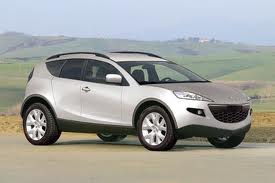
The Mazda Minagi concept car embodies Mazda's new SkyActiv technologies and new KODO design language, signaling the way for the next generation of Mazda cars to come.
The Mazda Minagi concept makes its world premiere at the 2011 Geneva Motor Show as the expression of Mazda's new SkyActiv technologies and new KODO design language. It is the first model which showcases characteristics likely to be seen in the next generation of Mazda cars.
For this reason, Mazda has fully incorporated its SkyActiv technologies into every aspect of driving performance, including the powertrain, chassis, and even body design. As the second concept vehicle to incorporate Mazda's new 'KODO - Soul of Motion' design language, Minagi challenges conventions with emotional design and exhilarating performance.


While Shinari was a pure design concept to express the full potential of KODO design, Mazda Minagi gives a glimpse of the next generation of products to come. As the second concept car to adopt Mazda's KODO design theme, Minagi's design elements combine the expression of energy pulsing throughout the vehicle with the keen agility to move about freely and nimbly. With its upright, compact packaging, Mazda Minagi offers a vision of KODO design that is different to Shinari, yet it shares the same sinuous, powerful stance.
"I wanted to convey something different from the Mazda Shinari. I felt a compact crossover SUV was the perfect vehicle to express agility and focused movement; the flexibility of four limbs moving in unison, and an upright posture."
The Mazda Minagi is a stylish expression of pent-up energy. In Japanese, its name conjures up the image of an object pulsating with energy and perfectly reflects the vehicle's speed, agility and spirited character. For Minagi, Mazda designers looked at different aspects of cheetahs as they hunt. A cheetah's head is positioned high, while long, powerful and supple limbs hold its lean torso upright to enable it to change direction quickly at high speed. Mazda's designers set out to evoke the moment when an animal contracts its muscles, ready to sprint and lunge at its prey. Furthermore, such a lunge can be in any direction; an idea which fits with the function of an agile crossover SUV as it nimbly darts through a sprawling cityscape.
Major features of the Mazda Minagi Concept
An urban-friendly compact crossover SUV which combines emotional design with exhilarating performance
  • Mazda Minagi is the first concept car to fully adopt Mazda's SkyActiv technologies and new 'KODO - Soul of Motion' design and it represents Mazda's next generation of products
  • Mazda's unique compact crossover SUV for urban explorers fuses emotional design - which conveys a lively ability to quickly leap into action and head in any direction - with the driving pleasure and outstanding environmental and safety performance of SkyActiv technologies
  • KODO design elements adopted by this compact crossover SUV express pulsating energy and a nimble ability to move about freely
Exterior design
  • The vehicle's crouched stance expresses the image of a cheetah as it stands with its weight poised on its hind legs, ready to lunge at its prey
  • The cargo bay of conventional SUVs often resembles a vehicle wearing a backpack, whereas Minagi presents an image of a muscular entity that cleanly incorporates spaciousness within well-toned lines
  • Placing the A-pillar rearward emphasizes the rearward orientation of the cabin. This stands in sharp contrast to the single-arc silhouette of frontward A-pillar placement on minivans, and emphasizes the driving position - a priority for the design of the Mazda Minagi concept
  • The cabin's position relative to the lower body is further back than on conventional SUVs. This emphasizes the motion expressed in Minagi's form
Front view
  • The chromed 'signature wing' on the front fascia, shared with Shinari, makes Minagi immediately recognizable as a Mazda and creates a strong impression
  • Angling the front grille slightly downwards, while juxtaposing the headlamp housings design to slant upward, creates intensity
  • Adding more dynamic contours to the prominent front fenders - highly characteristic of Mazda cars - expresses KODO design language's forceful sense of accumulating, then instantly releasing pent-up energy. These elements combine with the dynamic form of the rear fenders further emphasizing the wheels, which form the legs of this predator
Side view
  • Sculpted lines along the sides of Mazda Minagi's body accentuate a sense of power which suggest the supple strength of a cheetah. These contours extend and connect with the rear fender in an expression which suggests the powerful musculature that joins the cheetah's shoulders and hips to its legs
  • The overall effect is a graceful and beautiful form which directs the eye from front-to-rear
  • The character line that flows along the lower part of Minagi's side panels symbolizes KODO's sense of power being accumulated, then quickly released
Rear view
  • The rear fenders project boldly outward to create a wide, stable stance befitting an SUV
  • The contrast between the rear fenders and the taut lines of the car's rear end mimics the strong and seductive hip line of a toned athlete
Headlamp design
  • As with Shinari, the chromed 'signature wing' that sweeps up from the bottom of the front grille disappears into the center of the headlamp housings dramatically
  • The design of the three-dimensional headlamp and rear combination lamps add a heightened sense of depth
  • The line of the 'signature wing' element and the headlamp design combine to express the intense look of a wild animal's gaze
Interior design
  • Mazda's designers set out to realize a driver-focused cockpit and cabin environment that expresses a reassuringly high level of strength and solidity. The interior employs quality materials along with the superior fit and finish of detailed hand craftsmanship
  • The above features add to the anticipation of the driving pleasure to come by creating a refined and quality cabin environment
  • The main black interior colour is highlighted by the colour red in the rear seatbacks and at the bottom of the door armrests
Characteristics unique to a compact crossover SUV
  • Four upright satin chrome struts appear to support the instrument panel, each rising upward in an image of vertical strength which appears to defy gravity, underscoring the impression that Minagi's occupants are securely protected
  • The design of the instrument cluster and surrounding switches emphasizes the snug, sporty nature of the driver-focused cockpit while expressing Mazda's sporty ethos

Mazda MX-5 Miata Special Edition

On the heels of its recent milestone announcement of 900,000 MX-5 Miatas being produced, Mazda North American Operations (MNAO) unveiled the 2011 Mazda MX-5 Miata Special Edition, a limited-run model of only 750 units. The Special Edition continues the MX-5's history of being a dynamically-engineered, enthusiast-approved roadster whose price doesn't discriminate and whose luxuries are not stripped.
Special Edition-exclusive interior touches include gray door trim and heated leather seats with gray stitching, a black leather-wrapped parking brake and steering wheel with contrasting gray stitching, chrome treatments to the air vents and instrument cluster as well as aluminum pedals (6MT only). Special Edition models are only available in Sparkling Black Mica or Dolphin Gray Mica, two new MX-5 colors, and are packaged with 17-inch Bright Finish aluminum alloy wheels.


The MX-5 traditionally has appealed to higher income households as its purchase reason is not as the practical daily driver but as the additional "fun" car, such as for those long, winding road-hunting weekends. Originally available in three trim levels - Sport, Touring and Grand Touring - the Special Edition is based off of a fully-equipped Grand Touring model but is only available with the industry-leading, easy-to-use Power Retractable Hard Top (PRHT).
Popular in both warm and winter climates, PRHT models go from rain-deflector to sun-worshipper in 12 seconds - with trunk space to boot - and outsell soft tops 4:1 worldwide. In the United States, there also is no lack of interest for premium accessories as 70 percent of Grand Touring models sold are PRHT-equipped, of which 50 percent are optioned with the Premium Package. The Premium Package is standard on the Special Edition and includes a Bluetooth® hands-free phone system, SIRIUS® Satellite Radio with a six-month complimentary subscription, Xenon headlights, Dynamic Stability Control (DSC) with a Traction Control System (TCS), an anti-theft alarm and the Mazda Advanced Keyless Entry and Start System.
It is no secret that on any given weekend more Mazdas and Mazda-powered vehicles are road-raced than any other brand. Performance and tuning are dynamically engineered into every Mazda and the MX-5 Miata Special Edition retains its sports car soul but with a few niceties not meant for the bumper-to-bumper love taps of the track.
The Suspension Package, optional on Touring and Grand Touring models, is made standard with the Special Edition and includes Bilstein® shocks, a limited slip differential (LSD) and a sport-tuned suspension. Both the six-speed manual transmission with short-throw shifter and six-speed Sport automatic with steering-wheel-mounted paddle shifters are available to enjoy the 167-horsepower, 140 lb-ft of torque 2.0-liter four-cylinder engine (158 horsepower with the 6AT). At only 2,593 pounds (2,619 pounds for the 6AT), the MX-5's nearly 50:50 weight distribution, combined with its track-proven suspension and responsive power, mean the rear-wheel drive sports car is a lightweight only in terms of size, not road prowess.
The 2011 Mazda MX-5 Miata Special Edition starts at $30,925 for the manual transmission, and $31,525 when equipped with the six-speed Sport AT automatic.

Mazda MX-5 GT Race Car

Mazda is set to challenge Aston Martin, Porsche, Lotus, and BMW on the race track with its lightweight Mazda MX-5 GT entry in the Britcar MSA British Endurance Championship 2011.
Weighing in at just 850kg, the Mazda MX-5 GT race car will accelerate from 0-to-60mph in just three seconds and hit a top speed of 160mph. The build of the car has been an engineering challenge to get the weight as low as possible using Mazda's gram strategy as the inspiration. Jota Sport examined every nut and bolt to reduce component weight and then match the power to the weight to give the lightest and most powerful MX-5 ever built.


An important aspect of the build was to ensure the Mazda MX-5 still remains true to its roots: great handling, huge fun-to-drive and the ability to challenge bigger more powerful competition, but at an affordable cost. The Mazda GT car ticks all those boxes and is now set to demonstrate its challenger spirit on the track.
Jota Sport, the race engineering team that will run the cars in the 2011 series, took 400 hours to build the shell to a specification that ensured it was 17 times stronger than required by the FIA. During the development they faced a number of engineering challenges such as suspension adjustments, integrating the six speed sequential gearbox, and lowering the engine. Weight saving strategies such as, the removal of interior components, reducing component weight and dipping the shell in acid lost 15kg from the MX-5 race car.
The completed Mazda MX-5 GT features a modified Mazda engine to produce 275bhp, a six speed sequential paddle shift gearbox, carbon doors and Polycarbonate windows. On the exterior, the Mazda MX-5 GT boasts a Spirited Green metallic body colour - a first on the MX-5 for Mazda UK - complimented by Jota Sport corporate coloured liveries in orange and grey.
Mazda is renowned for challenging conventions so the motivation to develop a Mazda MX-5 GT car comes naturally. It also comes at a time when Mazda has recently celebrated a number of milestones for MX-5 including its 21st anniversary and producing 900,000 MX-5 units globally since its introduction in 1989, with over 10 percent of global MX-5 sales from Britain. Meanwhile, the Mazda MX-5 continues to hold the Guinness World Record as the world's best‑selling roadster - testament to its continued popularity with British open top sports car fans.
The Britcar MSA British Endurance Championship is contested over nine races from March to November including a race at the Spa Francorchamps circuit in Belgium. The first race is a three hour endurance race at Silverstone next weekend, Saturday 26 March 2011, starting at 3.00pm.
This is the fourth time that Mazda has entered Britcar and this year the Mazda MX-5 GT car will be driven by two Mazda works drivers including experienced Mazda racing driver Mark Ticehurst, 39 from Hassocks, West Sussex and Auto Express journalist and racing driver Owen Mildenhall.
"The MX-5 production race car's modest power output, bullet proof reliability and nimble handling demonstrated last year how the MX-5 can be competitive against some of the purpose-built Lotus, VW and BMW race cars. With a higher power output combined with the durability, reliability and handling attributes that the MX-5 is renowned for; the Mazda MX-5 GT race car will be strong contender against the more powerful race cars in its class," comments Graeme Fudge, PR Director, Mazda UK.
The Mazda MX-5 GT car, prepared by Tunbridge Wells-based Jota Sport features the mandatory FIA approved safety equipment including a roll cage, race seats and harness, external electric cut-off and fire extinguisher, safety catches on the bonnet and boot lids, competition steering wheel and alloy wheels, while the running gear, rear axle, gearbox and engine have been modified to enhance performance

Mazda BT-50

At the 2010 Australian International Motor Show in Sydney, Mazda is unveiling the all-new Mazda BT-50 that signifies a new direction in the utility segment. It was developed as an "Active lifestyle vehicle," and is intended to further extend the appeal of a utility from traditional business users to a wide range of customers, including families and pleasure-seekers.
The current BT-50 is Mazda's only offering in the utility segment. It is an established one-tonne utility that has won numerous awards and gained a strong following all over the world. In developing the new model, Mazda intended to expand its appeal to customers who lead active lifestyles and have needs that cannot be met by conventional utilities. It offers all the functionality required for business use combined with passenger car-like comfort for family use; and for active customers in Australia and Europe, it is the perfect answer for all kinds of outdoor leisure activities. In this way, the new BT-50 has been developed to fulfill the varied requirements of customers in every market.

To ensure all these aims were met, the all-new Mazda BT-50 was developed under the theme "Active lifestyle vehicle." The result is a utility that offers unique value; it has refined and expressive styling; a comfortable, high quality interior; a smooth ride with the feel of a passenger car; sporty and responsive driving dynamics that reflect Mazda's DNA; and outstanding environmental and safety performance.
We wanted to design a truck that car lovers would be deeply pleased with and proud to own. We targeted a unique and expressive design that people would find desirable, and we also wanted it to be seen as strong and dependable. This led us to define the design concept as a "Sophisticated Beast."

As Ryo Yanagisawa, chief designer of the all-new BT-50, explains: "Mazda's brand message is Zoom-Zoom, which refers to the emotion of motion first experienced as a child. With the all-new Mazda BT-50, we aimed to express this emotion through the design, and we drew a lot of inspiration from various "movements" in the world around us. For example, we had a photograph of a lion. He looked like a magnificent predator with his muscles all bunching up as though he was about to pounce on his prey. His sinews were stretched taut ready to strike, and his mane framed a sharp, masculine countenance that seemed to say, 'I am the proud king of the beasts!' In profile, that lion appeared to be both intelligent and powerful. I really wanted the design of the truck to project that kind of image. This kind of inspiration was the basis of the emotional design that we worked so hard to achieve with the all-new BT-50."
Exterior - Lively and Imposing Styling
Without detracting from the strength or the level of functionality, we wanted to give the exterior of the all-new Mazda BT-50 an athletic design, overflowing with movement, that would make people immediately want to get in and drive. The crisp lines will have owners looking on with pride.
The finished car has a beauty and individuality that can be recognized at a glance from any angle, even up to 100 meters away.
  • Dynamic wedge-shaped proportions evoke an image of a large carnivore about to pounce on its unsuspecting prey. This is unlike any other utility.
  • Casting off the conventional boxy image of a utility, sporty and dynamic lines are in tune with the rest of Mazda's passenger vehicle lineup.
  • Further evolving Mazda's traditional prominent fenders, muscular lines flow from the fenders along the body sides.
A Front Fascia with a Bold, Overwhelming Presence and an Individual Rear End
  • Mazda's family face, the five-point grille, is further evolved for a more imposing expression with the headlights and a chrome crossbar forming a large pentagon.
  • The headlights have a bold boomerang shape, elaborate details and a functional beauty.
  • A first in the segment — the taillights are stretched horizontally, reaching around the corners and across the tailgate, for a sporty and refined rear view that is similar to a premium SUV.
Interior - A Sporty and Personal Space
We wanted to give the interior of the all-new Mazda BT-50 a more sporty and personal feel to complement the dynamic exterior image, and create a comfortable space to rival Mazda's current passenger car standard. The cockpit is designed to wrap around the driver and provide an environment that supports enthusiastic driving. It raises anticipation for a sporty and responsive driving experience that goes beyond any conventional utility.
  • The flowing design smoothly connects the center of the instrument panel to the raised center console, which has never before been seen in a pickup truck.
  • The dashboard has an asymmetric design to create optimal space on each side; it reassuringly wraps around the driver and provides an open space for the passenger.
  • Four bold metallic panel strips on the door trim and sides of the center console express dynamism and seem to be supporting the interior space.
  • A metallic outline highlights the two cylindrical meters and connects them via a center strip to improve readability and enhance the sporty, driver-oriented impression of the instrument panel.
  • The audio control panel and the climate control switch panel, which has independent driver- and passenger-side temperature controls, form a beautifully designed human interface.
With modern and refined styling both inside and out, the all-new Mazda Mazda BT-50 will raise the bar in the utility segment and for the first time provide a realistic alternative to the family wagon and 4x4 SUV.

Mazda CX-5

Mazda is unveiling the all-new Mazda CX-5 compact crossover SUV at the 2011 Frankfurt Motor Show. The CX-5 is the first vehicle of a new Mazda generation that will adopt the full range of Mazda's breakthrough SKYACTIV TECHNOLOGY and new design theme, 'KODO - Soul of Motion', which was showcased by the Mazda SHINARI and Mazda MINAGI concept cars.
The new Mazda CX-5 will be introduced progressively to global markets beginning early in 2012. Developed around SKYACTIV TECHNOLOGY - including all-new Mazda petrol and diesel engines, manual and automatic transmissions, body and chassis - the CX-5 delivers precise response and a high-quality, rewarding ride matched to outstanding environmental and safety performance.

The CX-5 is the first of a new generation of Mazda vehicles that will evolve the company's hallmark fun-to-drive character by providing a new level of driving pleasure.
Aiming for the Best of all Worlds - Making a crossover SUV with enduring appeal
CX-5 Programme Manager, Hideaki Tanaka, says: "We aimed to develop a vehicle with a long-term appeal that would delight owners and make them proud for years to come. I think that these were the most important values we had to embody in the CX-5. We wanted to deliver the best of all worlds in order to suit the various lifestyles and life stages of our customers, and satisfy their high expectations over the long term. Specifically, we focused on providing pleasure through the CX-5's appearance, ist precise handling, its insightful functionality, and its long-term appeal. By aiming to achieve the ideal in each area, we pursued the innovation of driving pleasure."
The Mazda CX-5 development team focused on form, performance, function and texture, investigated all points of contact between the driver and the vehicle, and examined how to make them more pleasing. Then they prioritized ergonomic design and concentrated on the most essential elements in order to provide a "purer" sense of driving pleasure.


Design - Form that conveys a strong sense of vitality and agility
Following the Mazda MINAGI concept car that was unveiled at the 2011 Geneva Motor Show, the CX-5 becomes the first production model to feature Mazda's new design theme, 'KODO - Soul of Motion'. Chief Designer, Masashi Nakayama says: "With the CX-5, our focus was on expressing a strong sense of vitality and agility. We looked at videos of cheetahs; their agile footwork and how they use their entire body as a spring to accelerate rapidly and change the direction instantly. They emanate great energy throughout their entire body. Inspired by their efficient yet beautiful movements, we aimed to push the SUV appearance to new levels with KODO design language."
The exterior design features bold styling that simultaneously expresses SUV-like solidity and functionality with Mazda's characteristic sense of vitality and agility. Inside, Mazda created a driver-oriented cabin with solid styling that reflects the Mazda CX-5's strength and high rigidity.
KODO: SOUL OF MOTION
Over the years Mazda has often explored the idea of 'motion' to inspire its unique vehicle designs. The new generation of Mazda cars, beginning with the CX-5 compact crossover SUV, is influenced by nature's power and beauty.
They have been evolved by taking the instantaneous movement of animals or humans as inspiration. This instantaneous movement is the ultimate form of motion, filled with vitality and emotion; it is the essence of Mazda's new design language 'KODO - Soul of Motion'.
The new design language was first introduced in 2010 with the SHINARI concept, a 4-door sports coupe created by the design team led by Ikuo Maeda, General Manager Design Division of Mazda Corporation. The Shinari incorporates all design elements of the KODO theme and was followed by the MINAGI concept car, a compact crossover SUV that was the forerunner of today's Mazda CX-5, the first mass production vehicle that fully applies KODO design.
Exterior
  • Front view: a new Mazda family face centred on a new 'signature wing' expresses strength and depth.
  • Rear view: The contrast of prominent rear fenders and taut rear end conveys toughness and grace that underline its athletic form.
  • Side view: The prominent front fenders and sculptured body sides accentuate a sense of power which suggests powerful muscles.
  • The exterior design contributes to excellent aerodynamics (Target Cd of 0.33) and a quite cabin.
Interior
  • The driver's side, especially the meter hood, has a deep, longitudinally stretched design that resembles a cockpit and produces a sense of forward momentum. The detailed, high-quality meter design raises the driver's anticipation for the ride ahead.
  • On the passenger side, the instrument panel looks ample and solid, with a horizontal design that generates a sense of security.
  • New soft materials are adopted for the instrument panel and door trim that are most often seen and touched.
  • Parts that are used most often, like the steering wheels spokes and inner door handles, have a satin chrome finish, which enhances the high-quality, genuine feel of the interior.
Functionality
The development team thoroughly researched what features are needed to deliver comfort and convenience, and focused on providing flexibility that drivers and passengers can enjoy with ease. The development team realized a comfortable and user-friendly interior with noticeably efficient use of space and intelligent functionality. Additionally, the human-machine interface (HMI) presents information in an intuitive and easy-to-understand way that can be read in an instant, in order to minimize the driver's eye movement and create a cockpit environment that aids driver concentration.
Spacious, practical and smart
The 2,700 mm wheelbase, one of the segment's longest, enabled streamlined styling and a comfortable cabin.
Class-leading rear seat legroom of 997 mm. Spacious rear seats in which adult passengers can ride in comfort with ample knee space.
500 litres of useable luggage space (including a sub trunk) is maximized by removing protrusions and dead space.
Smart, easy-to-use KARAKURI functionality. The world's first 40:20:40 split independent rear seats with a remote fold-down function. The rear centre seat creates a large flat luggage space when folded down. The tonneau cover automatically lifts up and down as the rear liftgate is opened and closed.
As well as comfortably accommodating two adults, the 40:20:40 split rear seats enable long objects to be loaded by folding the centre seat down flat, even with two child seats installed on both sides. The rear seats can be folded down remotely by a simple flick of levers located at the back of the luggage area.
Provides generous storage capacity demanded of an SUV, including a large open space in the centre console that can hold all sorts of items, and front and rear door pockets large enough to take a 1-litre bottle.
Advanced Human Machine Interface (HMI) with high connectivity and intuitive operation
A 5.8-inch colour touch screen monitor is positioned in the centre at the top of the dashboard, and shows data related to the infotainment system — including audio, phone connection — and contains the new navigation system.
Mazda CX-5's new HMI system improves safety by minimizing the driver's eye movement away from the road. The menu controls for the steering-wheel-mounted switches are arranged according to function, a centre display touch screen, and a HMI commander are positioned on the centre console. With the vehicle stopped, the driver might operate it by touch screen. During driving, the driver can operate the menu more safely and easily with the HMI commander. This layout also enables some functions, especially navigation, to be operated intuitively from the passenger seat.
Its new integrated navigation system is based on the latest TomTom® technology, one of Europe's most popular provider of navigation system. For an affordable price, customers can enjoy more accurate arrival-time estimates, which are calculated based on previously recorded data, and better suggestions for alternate routes to avoid traffic jams. By accessing the homepage through a personal computer at home, customers can also download new roads that are not listed on maps. For an extra fee, TomTom® Live Services are also available depending on country). These provides more accurate real-time traffic information, weather forecasts, fuel prices and other constantly updated information.
For high connectivity, customers can connect their mobile MP3 players or mobile phones via USB or Bluetooth® connection to the HMI system. Searching for your favourite song is made easy as title, album and artist will be displayed on the touch screen.
The best way to listen to your favourite music in the Mazda CX-5 is on a BOSE® surround-sound system - with a new-generation energy-efficient amplifier and subwoofer.
Dynamic Performance
Regarding dynamic performance, the ultimate goal of the Mazda CX-5 development team was to make the vehicle move precisely according to the driver's wishes. To attain precise response, engineers concentrated on transferring the high performance levels of SKYACTIV TECHNOLOGY to the driver and used what is called a PDCA cycle to comprehensively analyze the driving process:
  • Plan: the driver forms a vision of what he wants to do
  • Do: the driver communicates his intention to the vehicle
  • Check: the driver receives feedback from the vehicle confirming that its motion perfectly matches his intention
  • Action: the driver proceeds to the next action
First, the development team focused on creating a cockpit environment to communicate the driver's intention to the vehicle. To enable linear operation, they optimized every point of contact between car and driver including driving position, pedals, steering wheel, seat hold, and field-of-view. Next, they examined the quality of feedback coming from the car. The test drivers judged this quality by asking, "Did I control the car as I wanted?" and "Do I need to change the way the car responds?" In order to boost the quality of vehicle feedback, the team worked on making the feedback match the driver's expectations by making it highly predictable. Their objective here is to enable the driver to input his intention with a single action, removing the need for any corrective inputs and creating conditions where the driver and vehicle are perfectly synchronized. In addition to this, the team added an overall development target to create ideal conditions in which the driver's input and vehicle feedback were in complete harmony over the full range of motions from going, turning and stopping.
The superb ride quality of the Mazda CX-5, and its precise response, can be felt the instant the steering wheel and pedals are operated, and this feeling intensifies the more one drives it.
All-new Mazda SKYACTIV Chassis & Body
The Mazda CX-5 has newly-developed strut suspension in the front and a multi-link layout in the rear. The geometry of the suspension links and the bush characteristics are optimized to ensure light, linear steering response at mid-to-low speeds and excellent high-speed stability. The rear dampers also have a forward-tilting layout, increasing comfort even on rough road surfaces.
A newly-developed electric power assist steering system offers highly precise control according to vehicle speed. At mid-to-low speeds, it provides natural feedback and linear feeling from small to large angle inputs. At high speeds, it gives firm, confidence-inspiring feedback.
The brakes deliver easily-controllable, precise and assured braking performance from low to high speeds.
The lightweight yet rigid SKYACTIV-BODY framework is optimized for handling stability, low NVH and excellent collision safety performance. It supports the Mazda CX-5's rewarding and high-quality, responsive ride.
Care was taken with NVH to ensure the driver hears necessary audio feedback while actively eliminating intrusive noises. Noises were initially separated into road noise and engine noise. For each, the unpleasant low-frequency, mid-frequency and high-frequency noises were individually identified and efficiently eradicated, resulting in a quiet cabin environment.
To achieve smooth airflow under the vehicle and suppress eddies forming behind it, the air is directed upwards using a new underfloor design. The development team effectively reduced underfloor air resistance and optimized the aerodynamic shape of the upper body argeting an outstanding Cd of 0.33.
All-new Mazda SKYACTIV Powertrains
The SKYACTIV-G 2.0 petrol engine models have the world highest compression ratio of 14.0:1, and their 4-2-1 exhaust system prevents knocking and provides abundant torque from low engine speeds, enabling acceleration that precisely matches the driver's intention. Models with this engine achieve outstanding fuel economy, precise response, and a high-quality, linear and rewarding ride:
  • FWD: Maximum torque of 210 NM at 4,000 rpm and maximum power of 121 kW/ 165 PS at 6,000 rpm
  • AWD: Maximum torque of 208 NM at 4,000 rpm and maximum power of 118 kW/ 160 PS at 6,000 rpm
The SKYACTIV-D 2.2 diesel engine models have the world's lowest compression ratio for a diesel engine of 14.0:1, and a highly efficient two-stage turbocharger that delivers spirited and linear acceleration and exhilarating driving dynamics that surpass conventional diesel-engine vehicles. They also achieve outstanding fuel economy for a compact SUV with extremely clean emissions that clear Euro6 without the need of any NOx after-treatment systems. Two variants of the engine are available:
  • A High Power version developing maximum torque of 420 Nm at 2,000 rpm and maximum power of 129 kW / 175 PS at 4,500 rpm.
  • A Standard Power version produces maximum torque of 380 Nm at 1,800-2,600 rpm and maximum power of 110 kW / 150 PS at 4,500 rpm.
All Mazda CX-5 models come with a choice of two new transmissions:
  • The six-speed SKYACTIV-DRIVE automatic transmission provides linear acceleration and a direct shift feel similar to a dual clutch transmission.
  • The six-speed SKYACTIV-MT manual transmission, with ist compact architecture and enhanced gear structure, delivers the light and crisp shift feel known from the MX-5. Both support fuel efficiency and the high-quality ride feel of the CX-5.
Environmental and Safety Performance
The Mazda CX-5 uses the full array of SKYACTIV Technologies to achieve outstanding fuel economy and emissions performance without sacrificing its fun-to-drive character. In terms of safety, Mazda's fundamental approach is to "inspire peace-of-mind and confidence in order to enhance driving pleasure." Based on this approach, Mazda engineers worked to advance the vehicle's core performance attributes of "driving, turning and stopping" as well as visibility and operability. Thanks to the lightweight and highly-rigid SKYACTIV-BODY, the CX-5 provides excellent collision performance that will attain top ratings in crash tests around the world.
Environmental Performance
The SKYACTIV-G 2.0 petrol engine with FWD, 6-speed manual transmission and i-stop system targets a mere 6.0 litres of fuel per 100 km (combined) with CO2 emission of 139 g/km.
The SKYACTIV-D 2.2 diesel engine with FWD, 6-speed manual transmission and i-stop system targets just 4.5 litres per 100 km (combined) with CO2 emission of just 119 g/km.
The SKYACTIV-D engine meets Euro Stage 6 emission standards without adopting an expensive NOx after-treatment system.
The SKYACTIV-DRIVE automatic transmission with its new lock-up clutch, achieves lock-up in almost all driving conditions. This reduces transmission slip significantly and contributes to fuel efficiency. It is available for both petrol and diesel engines.
Mazda's idling-stop system, i-stop, is available for the CX-5 with both SKYACTIV-G and -D. It has previously been used only with petrol engine models. With a newly-developed, more advanced control system, the new i-stop shuts off the engine more frequently, helping to further improve real-world fuel economy.
Single-nanotechnology in the catalyst improves exhaust gas after-treatment performance and reduces the amount of precious metals required.
The Mazda CX-5 is one of the lightest and most aerodynamic vehicle in its class, which contributes to its outstanding fuel economy and low CO2 emissions.
Safety Performance
The base of the A-pillars has been optimized to ensure excellent forward visibility on winding roads and at junctions. The side mirrors are mounted on the doors themselves to create a gap between the mirrors and A-pillars through which drivers can check their surroundings.
A host of new, cutting-edge features are available to support the driver's own safety checks and hazard awareness :
Smart City Brake Support (SCBS) is standard for mid and high grade (first in the compact SUV segment) and uses a new radar sensor system to help prevent or reduce impact of front crash accidents at low speed (up to 30 km/h) by automatically braking the vehicle.
Upgraded Rear Vehicle Monitoring System (RVM) that detects cars approaching from behind or driving in the blind spot and warns the driver (now from 30 km/h onwards instead of 60 km/h to support city driving safety).
Lane Departure Warning minimizes the risk of leaving the driving lane unintentionally by employing a camera to detect and judge the position of white lines to then warn the driver of a possible lane departure.
High-Beam Control (HBC) automatically changes between low and high beam during night driving in order to avoid blinding upcoming vehicles.
The lightweight, highly-rigid SKYACTIV-BODY provides excellent collision performance and is conceived to attain top ratings in crash tests around the world.
A multi-load path structure and a front end with a cross-shaped cross-section increases crash energy absorption, further improving safety performance in frontal, side and rear-end collisions.
The anti-whiplash design of the front seats helps to reduce neck injury in the event of a rear-end collision.
There are two impact beams in the front doors. The upper beam has a round cross-section, and the lower beam has a double-ridged cross-section. The lower rear beam also has a double-ridged cross-section, helping to improve strength.

Mazda CX-7

The 2007 CX-7 is a mid-size crossover SUV model from Mazda, the production version of the MX-Crossport concept car. The CX-7 is built in Hiroshima, Japan, starting in early 2006. The CX-7 was shown publicly for the first time at the 2006 Los Angeles Auto Show in January. Production officially began on February 20 at Mazda's Ujina #2 factory in Hiroshima. The CX-7 goes on sale in spring 2006 as a 2007 model. It replaced the Tribute as the company's small SUV, and competes against the redesigned Honda CR-V, Hyundai Santa Fe, as well as newcomers such as the Dodge Nitro and Ford Edge.


The CX-7 rides on an all-new platform instead of sharing the Ford/Mazda CD3 platform used by the larger Mazda CX-9/Ford Edge/Lincoln MKX crossovers as well as the Mazda6. It uses the front suspension of the Mazda MPV minivan, with the rear suspension from the Mazda5. Many of the all wheel drive components come from the Mazdaspeed 6, as does its turbocharged engine. The only available transmission will be a 6-speed automatic. The CX-7 will slot between the Tribute and CX-9.
Power comes from the same 2.3 L straight-4 MZR engine used in the Mazdaspeed 6, and tuned to produce 244 hp (182 kW)at 5000 RPM and 258 ft·lbf (350 N·m) of torque at a low 2500 rpm. 99 percent of the maximum torque is available to 5000 rpm.
The CX-7 features fully independent suspension, four-wheel ventilated disc brakes with standard anti-lock brakes, stability control and traction control, and a choice of either front wheel drive or Mazda's Active Torque-Split all wheel drive system. With the Active Torque-Split system, two computer-controlled magnetic clutches feed up to 50 percent of the engine's torque to the rear wheels. The Mazda CX-7 is estimated to deliver over 23 mpg (10.2 L/100 km) in combined driving.
There are three models:
  • Sport is the base version, priced from $24,310
  • Touring is the upscale version, priced from $26,060
  • Grand Touring is the top version, priced from $28,560
All models are availble with All-Wheel Drive

Mazda CX9

Mazda CX9 provides SUV roominess and comfort for six on the inside, with a sleek appearance that has high emotional appeal. This effect is created by a silhouette with a flat windscreen angle, thin tapered windows, large fenders and a rising belt line. At the front, the new CX9 emphasises power and build quality with a big front bumper, sleek headlamps with silver-look edges that wrap into the fenders, and a sculptured bonnet. The rear design features a five-point rear window and a large rear bumper for stability and strength. To this it adds sporty touches like a roof spoiler, dual trapezoidal exhaust pipes and 10-spoke, 20-inch aluminium alloy wheels (depending on market). Insightful details like the silver-look mouldings for the lamps, the chrome used for the grille bar and front intake areas and available turning signals in the side mirrors, all add a sense of prestige to owning a new Mazda CX9.

Interior Design - Roominess and Quality
Despite looking more like a sports car than an SUV on the outside, on the inside Mazda CX9 uses its full size - with a length of 5,089 mm, a width of 1,936 mm and height of 1,728 mm - to deliver SUV roominess, high quality craftsmanship and materials. Occupants are greeted by decorative, wood-like embellishments on each side of the centre console and at both ends of the dashboard. The cockpit has a driver cluster with black-out meters, indirect illumination and silver rings. Its leather seats (depending on market and grade) have a sporty look, are firm and durable, with high-quality stitching and are matched to trim materials with superior quality feel and silver accents throughout. Two interior colour packages are available, in either black or sand.


The new Mazda CX9 offers a long list of standard features. This includes an all-new 3.7-litre V6 engine coupled to a 6-speed automatic transmission with manual shift mode and Active Torque-Split all-wheel drive. Also available (depending on market) are a burglar alarm, privacy windows, power windows front and back, power adjustable and heated front seats and driver's seat memory function (for up to five settings). Other available features include three-zone heating and air conditioning, a premium BOSE®, 10 speaker 277 W audio system with Centerpoint® surround system and AudioPilot® noise compensation, rain sensor and auto light systems, and an Advanced keyless entry and start system for unlocking all four doors automatically from outside the car. The card key also operates the power rear liftgate. Combined with the high level of craftsmanship and build quality of Mazda's flagship SUV, and you have an overall package that stands out in the non-premium SUV segment.
Superior NVH for a Quiet Cabin
All these features can be enjoyed to the fullest, because CX9's cabin is designed to be quiet and relaxing, even at cruising speed on the motorway. Its new V6 engine and automatic transmission are smooth and quiet (see Powertrain below). And it supplements this with noise-suppressing foam applied at 22 locations in the body shell - the most of any Mazda vehicle ever - and various structural technologies which effectively dampen road and wind noise from reaching the cabin.
Roominess, Comfort and Seat Variability
The dynamic exterior of the Mazda CX9 is not achieved by sacrificing SUV comfort and seat flexibility. With one of the segment's longest wheelbases (2,875 mm), the Mazda CX9 offers space for a maximum of six people. The cockpit is designed to support this by being easy to use and practical. The steering wheel is both tilt and telescopically adjustable. The leather driver's seat is power adjustable for slide and height, has electric lumbar support adjustment and a seat position memory system that can store up to three different driving positions and two additional positions using the two card keys - and the front passenger seat is power adjustable as well. The shift lever of the six-speed automatic transmission is positioned high at the front of the floor console where it can be easily operated in either automatic or manual modes, and the steering wheel has audio controls and cruise control (depending on market). This is combined with large and comfortable back seats that can be folded individually to create a large load space. There is even a handy strap at the back of both third row seats that lets you fold them into the floor and lets you pull it back up again. And of course practical storage compartments can be found everywhere in the cabin. There is a large front floor console that comes with an auxiliary jack (AUX) for hooking up and playing an MP3 player using the car's premium audio system; and a 12-volt power outlet that can be used to recharge the batteries of your notebook, mobile phone and other electrical equipment.

Powertrain - Smooth and Powerful
The powertrain for the Mazda CX9 was chosen specifically to support the vehicle's high quality look and feel with an exhilarating yet sophisticated driving experience. Under the bonnet is a new MZI 3.7-litre V6 petrol engine that produces 204 kW/273 HP (SAE-NET) of maximum power at 6,250 rpm, and a robust 366 Nm of torque at 4,250 rpm - making it the most powerful engine in the Mazda line-up.
This 60° short-stroke V6 has a die-cast aluminium block with cast-in iron cylinder lines and aluminium cylinder heads - for minimal weight and high durability - and it adds advanced engine technologies to optimally combine performance with acceptable fuel consumption. These include sequential valve timing (S-VT) for optimised engine torque at all speeds. It also has a high compression ratio of 10.3:1 and electronic throttle control, which helps provides instant response to pedal input for lots of driving fun. Two catalytic converters make sure the Mazda CX9 meets Euro Stage IV emission standards.
Yet despite its fun-to-drive nature, the MZI 3.7-litre V6 has low NVH levels for a crossover SUV. To achieve this, a highly rigid cylinder block is used to reduce engine vibration, the side frame engine mounts are reinforced to reduce transmission vibration, and the forged-steel crankshaft has a dual-mass damper for smooth operation. Camshaft vibration is kept to a minimum by the use of sprockets with rubber cushion rings, and the intake manifold is designed to reduce intake air undulation and resistance.
Six-Speed Automatic Transmission with Manual Shift Mode
These engine technologies are combined with a six- speed automatic transmission with manual shift mode as standard equipment. This transmission provides an optimal balance between acceleration, ride comfort and quietness. Broad gear ratios ensure lively acceleration and smooth, powerful cruising speed, while the top two gears are laid out as overdrive, which helps save fuel when driving on the motorway. In automatic mode, it delivers a sporty shift feel and quick response to pedal input, and near manual-like shift characteristics in manual shift modes, for the best of both worlds.
Chassis & Safety - Responsive and Safe
Mazda CX9's stiff body shell and chassis systems - combined with the smooth, cultivated power of its V6 engine - make for an exciting driving experience not usually found on an SUV this size. And these superior dynamic attributes play a major role in making the CX9 something special in its class.
Zoom-Zoom Handling
The Mazda CX9 body shell has a highly rigid structure in the lower body with multiple cross members under the floor, a reinforced upper body area at the C-pillar, a high-tensile steel B-pillar and special roof reinforcements. This structure is made even more robust by the incorporation of crossing seat frames between the cross member of the floor and by the use of more laser spot welds and weld bonds than most of its competitors. All this results in high torsional and flexural rigidity, which delivers superior stability and Zoom-Zoom handling - without making Mazda's flagship SUV unduly heavy.
Its McPherson strut front suspension uses a 6-point rubber mount perimeter frame. This gives strong support and a sharp, linear feel to its hydraulic power assist rack-and-pinion steering system. The multi-link rear suspension employs one trailing arm and two lateral locating members on each side, and a rear frame with two rubber mounts on each side. The connecting points of the trailing arms are placed higher than usual, which further improves their stability during braking. The link layout is optimised to provide consistent wheel alignment when external forces are acting on the rear suspension, for predictable handling.
Superior Traction - Mazda's Active Torque-Split All-Wheel Drive
A main contributor to the predictable handling of the Mazda CX9 is its Active Torque-Split All-Wheel Drive system that provides traction in all road situations. Based on the system used by the Mazda CX-7; it monitors road conditions, ABS/DSC operating conditions, wheel speed and engine operation to optimise torque between the front and rear wheels (between 100:0 and 50:50). Depending on these factors, the system automatically selects snow mode or normal mode, and torque is distributed to the front and rear wheels by the coupling unit for optimised traction.
High Levels of Safety
Mazda CX9 is also one of the safest SUVs. Active safety features include a high seating position for great all around visibility, large front and rear ventilated disc brakes (320 mm and 325 mm respectively) combined with roll stability control (RSC), ABS, emergency brake assist (EBA), electronic brake-force distribution (EBD) and DSC (depending on market and grade). The foundation for Mazda CX9's passive safety system is its body shell. Using high-tensile steel and large-section body members, it disperses impact energy away from the passengers and keeps body deformation to a minimum during a collision. Also onboard is a special front sub-frame extension designed to help prevent the front of the Mazda CX9 from climbing up the front of an on-coming vehicle in a head-on collision. Passengers are further protected by front, side and three- row curtain airbags (depending on market and grade), three-point seat belts with pretensioners and load-limiters for the front seats, a collapsible brake pedal and specially designed front head restraints that help reduce possible neck injuries during a rear impact. No wonder the Mazda CX9 received the highest possible ranking of five stars on frontal and side impact crash testing from the U.S. government's National Highway Traffic Safety Administration (NHTSA), and a four-star rollover resistance rating.

Mazda rx8

                                     Mazda rx8
                                         Mazda rx8
                                          Mazda rx8
                                        Mazda rx8
                                          Mazda rx8
                                          Mazda rx8
                                        Mazda rx8
                                          Mazda rx8 
                                         Mazda rx8
                                        Mazda rx8
                                         Mazda rx8 

Mazda RX-8 sports car produced by Mazda Motor Corporation. It 'was released in 2001 North American International Auto. This is a continuation of the RX-7 and like its predecessor, the RX range is powered by a Wankel engine. RX-8 has started selling in North America, the 2004 model year.
                                          Mazda rx8 
Mazda introduced the rotary engine cars to the United States in 1971, from R100, followed by the RX-2 RX-3 RX-4 RX-5, and finally three generations of RX-7 car sport. But the lack of material comfort and convenience, combined with high prices and declining interest in sports cars and coupes at the time headed Mazda RX-7 drag in most major markets except Japan. After 1995, a part of the Mazda from a relatively weak U.S. economy MX-5 Miata. As popular interest in importing and tuning performance cars reappeared in the 1990s, thanks in part to popular cultural influences such as the Sony PlayStation video game Gran Turismo, wading Japanese manufacturers back in the performance car market and Sports in the United States.

VW NILS Concept

Volkswagen NILS, a single-seat electric concept vehicle that offers a glimpse of a new form of minimalist mobility, has been unveiled ahead of its public debut at the 2011 Frankfurt Motor Show. This concept car - which features an aluminium space frame, wing doors and free-standing wheels - has the dynamic performance of a sports car, yet travels silently, and with zero emissions.The NILS project is supported by the German Federal Ministry of Transport, Building and Urban Development, and is designed to be both technically realistic and economically supportable.'NILS anticipates the future. The goal of the NILS project is to research a technically realistic and economically feasible concept for a minimalist commuter vehicle that makes individual transportation more efficient and eco-friendly thanks to its electric drive,' said Prof. Dr. Jürgen Leohold, Head of Volkswagen Group Research.Commenting from the strategic perspective is Dr. Rudolf Krebs, Group Chief Officer for Electric Traction: 'In terms of the Volkswagen Group's roadmap for electric mobility, these forward-thinking vehicle concepts play an especially important role. That is because the breakthrough of electric mobility will lead to new vehicle requirements - many of which are oriented towards very specific target groups. In advancing electric mobility to high-volume production, it is not enough to simply electrify existing vehicle models.'
With a range of 65 kilometres (40 miles) and a top speed of 130 km/h (80 mph) Volkswagen NILS would be the ideal vehicle for the majority of commuters in Germany. According to the German Bureau of Statistics, 73.9 per cent of all commuters residing between Berlin and Munich cover less than 25 kilometres (15.5 miles) on their way to work.Cars have always been mirrors of their times - their design styles and technological standards reflecting a particular era - and NILS is no different. It uses emissions-reducing electric drive technology to fulfil the specific requirements of commuters. In Germany, for example, about 60 per cent of all commuters travel by car, according to the Federal Bureau of Statistics; of these over 90 per cent travel alone. Zero-emissions vehicles like NILS will offer these frequent drivers a new eco-friendly mobility solution.Volkswagen NILS is a very compact car that requires extremely little space in traffic. It is only 3.04 metres long - making it about 50 cm shorter than the new Volkswagen up! - just 0.39 metres wide from wheel to wheel, and a mere 1.2 metres tall.Volkswagen NILS has the same basic layout as a Formula 1 race car, with the driver in the middle, the engine in back, and free-standing outboard wheels. The 17-inch alloy wheels are equipped with 115/80 (front) and 125/80 (rear) tyres optimised for low rolling resistance.Though its inspiration may come from Formula 1, the styling has its origins at the Volkswagen Design Centre in Potsdam, Berlin. Designer Thomas Ingenlath, the centre's director, said: 'NILS was designed to make a visual statement and transport a vision of the automotive future to the present. I am especially pleased that we managed to implement the concept of the two glass wing doors. This allowed us to create large transparent surfaces and simultaneously to make entering and exiting the vehicle very comfortable, even in the most cramped of parking spaces.'Because Volkswagen NILS is so compact and lightweight (460 kg), it is a lot of fun to drive. It has a top speed of 130 km/h, and can accelerate to 100 km/h in less than 11 seconds. This is achieved using an electric motor with a reasonably small 15 kW nominal power and short-term peak power of 25 kW. A lithium-ion battery supplies the electric motor with energy. The battery capacity (5.3 kWh) enables driving ranges of up to 65 km, depending on the style of driving. A battery of this size is relatively inexpensive, and can be charged either via a conventional 230-volt electrical outlet (maximum charging time two hours) or at an electric vehicle charging station. The socket is located at the back underneath the rear lighting module.The centrepiece of the electric drive system is the lightweight 19 kg electric motor together with its transmission and battery. Energy management is via a high-voltage pulse inverter, which - together with the 12-Volt DC/DC converter for the vehicle electrical system and the charger - forms an integral drive unit. All drive unit components are located compactly in an aluminium housing at the rear of NILS; drive is to the rear wheels.The motor, battery and all other components are so compact that there is still space for a small but practical bootspace. The body-coloured area above the rear lighting module swings upward, revealing space suitable for items such as a case of drinks and a bag.Optimal weight distribution helps to ensure that Volkswagen NILS allows drivers not only to commute with zero emissions, but also to have fun while doing so. The lightweight NILS drives like a go-kart. The steering is purely mechanical (the low weight means power assistance is unnecessary), while the electric motor produces its maximum torque of 130 Nm from standstill, via a one-speed transmission. Suspension is by double wishbones front and rear; while ESP (Electronic Stabilisation Programme) helps to tame any over-exuberance on the part of the driver.Safety is of course even more important than fun, and NILS is fitted with an automatic distance control system. This uses radar sensors to scan the space in front of the vehicle over a distance of about 200 metres and uses brake interventions to ensure that the distance to vehicles in traffic in front of the car does not drop below a specified minimum value. The system can even automatically brake the car to a stop, depending on the situation. Not only are the four disc brakes used to brake; electric traction by electric motor and battery regeneration can be used to brake as well. Last but not least, Front Assist is integrated in the automatic distance control system. This continually active system warns the driver of a potential collision; at speeds below 30 km/h (18 mph), automatic braking can avoid a collision under some circumstances.The instrument cluster is a seven-inch TFT display. The vehicle's speed is shown digitally in the middle, while energy flow is represented by bars. Another graphic display offers information on the driving range. The second central instrument is a mobile multifunctional device like the one used in the new up!: the Portable Infotainment Device (PID). It is snapped into theA-pillar to the right of the instrument cluster. Via touchscreen, the driver controls functions related to Navigation, Radio, Media, Telephone, Trip computer and - to preconfigure the driving range - 'Eco. The PID computes the expected driving range, then it not only displays the route on the map display, but also the radius and thereby the destinations that can be reached using the current battery charge.To save on weight and costs, certain functional elements and controls do without electrical assistance. The side mirrors, for example, are adjusted manually. The heating and ventilation system has full electronic control, and there is seat heating. Located to the right of the steering column is the motor start-stop switch; this round switch is also used to select D, N or R.The aluminium space frame body was designed to be a highly effective safety cell. The body in white is produced from extruded aluminium, cast aluminium and sheet aluminium. The roof frame together with the door mounts, a roll bar, the bootspace and the front bulkhead consist of high-strength sheet aluminium. Extruded aluminium is used in the side sills, the transverse profiles and the front and rear car sections. The front and rear side body are aluminium. Parts made of high-strength plastic include the bumpers and the trim panels on the side sills.The frames of the wing doors consist of three main elements: an inner section, a crash reinforcement section and an exterior part. When closed, they offer optimal crash safety. The door windows are made of lightweight, scratch-resistant, layered polycarbonate, while the front window is made of laminated safety glass.The headlights are striking bi-xenon modules, while the indicator lights and daytime running lights are white and yellow LEDs. In the acrylic glass of the rear lights - integrated in the rear section like small wings - the light generated by LEDs is routed via transparent semiconductors which (appropriately for an electric vehicle) consume minimal amounts of power.

Land Rover DC100 Concept

The Land Rover DC100 Concept, a modern interpretation of the iconic Land Rover Defender will make its debut at the 2011 Frankfurt Motor Show. Land Rover also confirms, that production of a new Defender is intended for 2015.Commenting on the Land Rover DC100 Concept car,Gerry McGovern, Director of Design, Land Roversaid: "Replacing the iconic Defender is one of the biggest challenges in the automotive design world; it is a car that inspires people worldwide. This isn't a production-ready concept but the beginning of a four-year journey to design a relevant Defender for the 21st century."John Edwards, Global Brand Director, Land Roveradded: "Loved the world over for its simple, honest and distinctive design, we are determined that the new Defender will be true to its heritage, while meeting the requirements of a changing global market.We plan to engage with existing and potential customers to help us finalise the details of the new vehicle. One thing's for sure, it's going to be an exciting journey, and we can't wait to get going."The Land Rover DC100 Concept builds upon the essential elements of the car's character and allows Land Rover to open the debate and inspire people to dream about the Defenders of the future. The next chapter in the Defender story will unfold on September 13, 2011 at the 2011 Frankfurt Motor Show.

Mazda 4

Mazda 3 Sedan

                           Mazda 3 Sedan
                              Mazda 3 Sedan 
The first images and details of the new Mazda3 sedan 2009 he released a Japanese manufacturer. New 2009 Mazda3 Sedan will be premiered Nov. 19, 2008 Los Angeles Auto Show.
Mazda3 Sedan (2009) will be equipped with 2.0 and 2.5 liter engines, and will be unveiled at the North American market. The Mazda3 sedan will be unveiled next generation in line with Mazda's global sales schedule.Unfortunately, there is some technical information issued by the company based on the 2009 Mazda3 Sedan. However, the new Mazda3 sedan 2009 will offer superior fuel economy, sporty driving, and tranquility as stated by the company.

                                      Mazda 3 Sedan 
Mazda has confirmed that the four-door sedan version of the new Mazda3, completely redesigned for the first time in five years, will be unveiled at the Los Angeles Auto Show November 19, 2008.
The new Mazda3, which is the latest evolution of the next generation of Mazda's Zoom-Zoom products, follows the introduction of the new Mazda2 and all-new Mazda6 last year. The new Mazda3 will be revealed during Mazda's press conference at LA Auto Show twelve twenty-12: 45 (local time).

                                        Mazda 3 Sedan 
Each element of the new Mazda3 has been developed following a refined ride, sporty high fuel economy and quietness. The environmental and safety features, based on the Mazda long-term "Sustainable Zoom-Zoom" vision, aim to achieve a balance with its fun to drive attributes. Add a new expressive face and Mazda design elements dynamically, and the new Mazda3 is everything a driver could want in a family car, sports.
                                       Mazda 3 Sedan 
The latest version of the car Mazda Family bestseller continues the pedigree of the current Mazda3, offering a refreshing alternative to buyers in this segment. Since its launch in 2003, the current Mazda3 has sold approximately 1.8 million vehicles in over 100 countries, including 13,000 sales in Britain last year and almost 8,000 sales here so far this year. Mazda3 has won more than 90 global auto prices to date. Mazda3 accounts for almost one in three Mazda sold each year worldwide.

                                       Mazda 3 Sedan
                                       Mazda 3 Sedan
                                        Mazda 3 Sedan
                                          Mazda 3 Sedan
                                        Mazda 3 Sedan
                                         Mazda 3 Sedan
                                        Mazda 3 Sedan